Approach Speed Management: Master Your Landing Energy

By the PilotLeague Team - January 2026

In aviation, speed is life. But on final approach, speed is precision. An approach that's too fast will have you floating over the runway unable to land, while an approach that's too slow risks a stall.

Mastering your Approach Speed (Vapp) is the secret of pilots who nail every Butter Landing. In this guide, discover how to calculate, maintain, and analyze your speed for perfect landings.

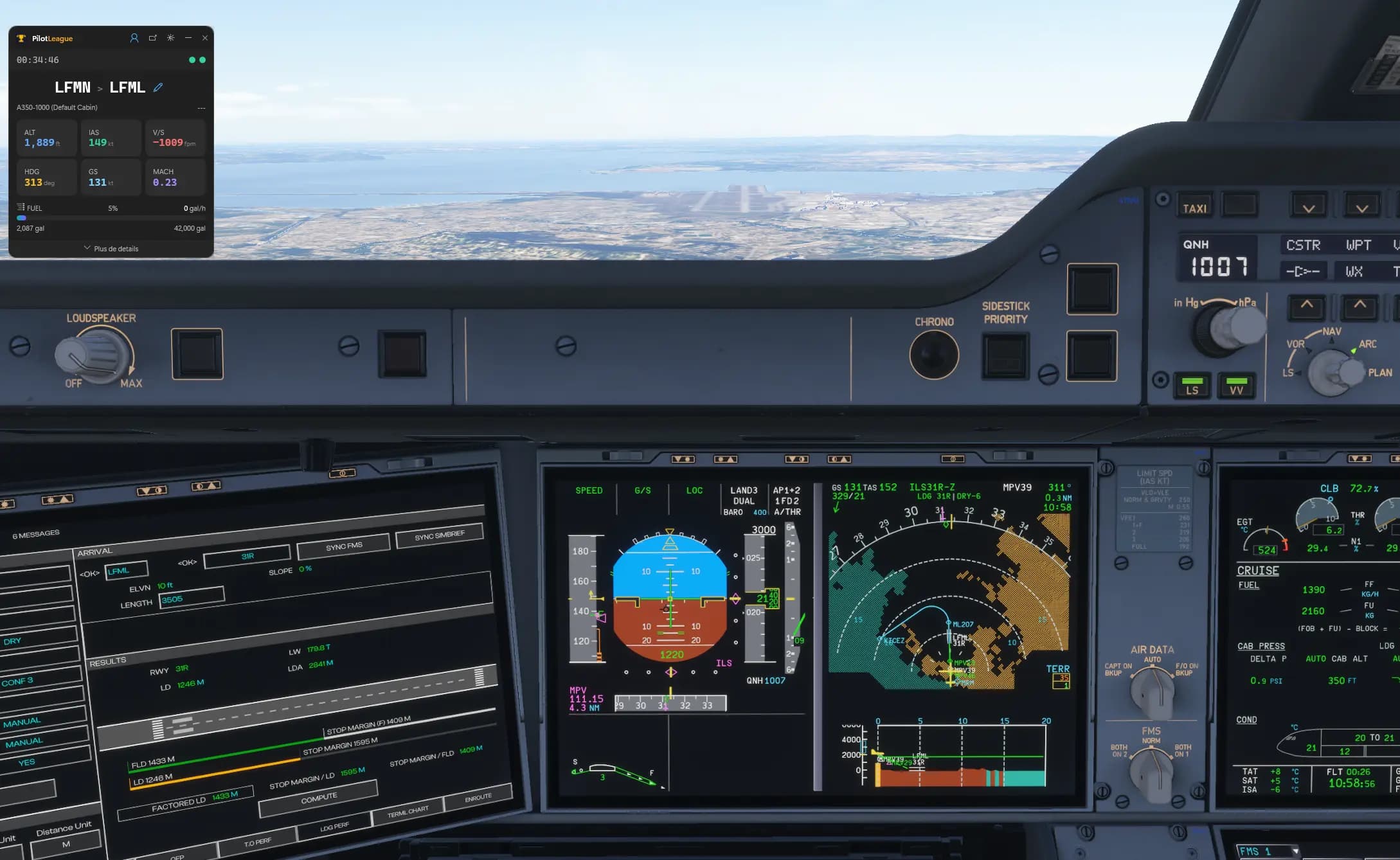
A350 cockpit on ILS approach to Marseille showing PFD with speed tape, navigation display, and PilotLeague overlay tracking flight data

A stabilized speed makes the transition to flare easier. Excess speed causes a touchdown outside the zone (Long Landing). Too much deviation? Consider an unstable approach and go around.

Track Your Speed Precision with PilotLeague

PilotLeague's analysis module monitors your IAS during the last 5 nautical miles. On your dashboard, visualize your "Speed Stability":

PilotLeague gives you precise metrics on every approach:

  • Vref Deviation: Check if you were on target when crossing the threshold.
  • Touchdown Speed: Analyze remaining energy at impact to understand your bounces.
  • GS Impact: See how wind affected your ground speed and stopping distance.
Analyze My Speed Stability →

The Key Concept: Pitch + Power = Performance

To maintain your speed on the glide path, you must balance your angle of attack and engine thrust. Pitch controls the path, power controls the speed.

HorizonPitch = Flight PathPower = Speed

Diagram: Force balance during a stabilized final approach.

Vref and Vapp: Understanding the Numbers

Vref is the reference speed at the runway threshold (typically 1.3 times the stall speed in landing configuration). Vapp is the speed you maintain during approach, calculated as:

Vapp = Vref + (½ Steady Wind) + Full Gust

This correction maintains a safety margin against turbulence and sudden wind variations.

Consequences of Incorrect Speed

Speed DeviationLanding ImpactPilotLeague Analysis
+10 kts (Too fast)Aircraft refuses to land and "floats".Long Landing / Off-zone touchdown
-5 kts (Too slow)Risk of hard landing or stall.Hard Landing (High G-Load)

Track Your Speed Precision with PilotLeague

PilotLeague's analysis module monitors your IAS during the last 5 nautical miles. On your dashboard, visualize your "Speed Stability":

  • Vref Deviation: Check if you were on target when crossing the threshold.
  • Touchdown Speed: Analyze remaining energy at impact to understand your bounces.
  • GS Impact: See how wind affected your ground speed and stopping distance.
Analyze My Speed Stability →

Related Articles to Perfect Your Landings

Flare Timing MasteryTouchdown Zone Precision GuideCrosswind Calculator

Speed: The Foundation of Perfect Landings

Mastered speed is the key to all your successful landings. Use PilotLeague to analyze every approach and refine your energy management. Soon, stabilization will be second nature.

Practice Makes Perfect

Apply these techniques in your next flight and track your improvement with PilotLeague.

Download PilotLeague Free
Landing MasteryBack to Flight Academy