TBM 930 Performance Guide: Master the Daher Turboprop in MSFS 2024

By the PilotLeague Team — Aircraft Knowledge Module #4

The Daher TBM 930 is the fastest single-engine turboprop on the market, cruising at 330 KTAS at FL310 — faster than many light jets and far more fuel-efficient. To extract this performance in MSFS 2024, you need to think like a turboprop pilot, not a piston pilot. Mismanage the PT6A or pick the wrong altitude and you waste 20% of your fuel on every leg. Pick the right cruise altitude and the TBM 930 becomes the most efficient way to cross 1,500 NM in less than 5 hours.

This guide covers the parameters that actually move the needle on PilotLeague: cruise altitude selection, ITT management on the PT6A-66D, fuel planning around weight, and the approach speeds that keep your landing rate in the green. Whether you fly the freeware default or the Hot Start study-level TBM, the data and procedures are identical.

Master the Daher TBM 930 in MSFS 2024. Complete performance guide: PT6A handling, FL310 cruise, fuel planning, approach speeds. Boost your PilotLeague scores.
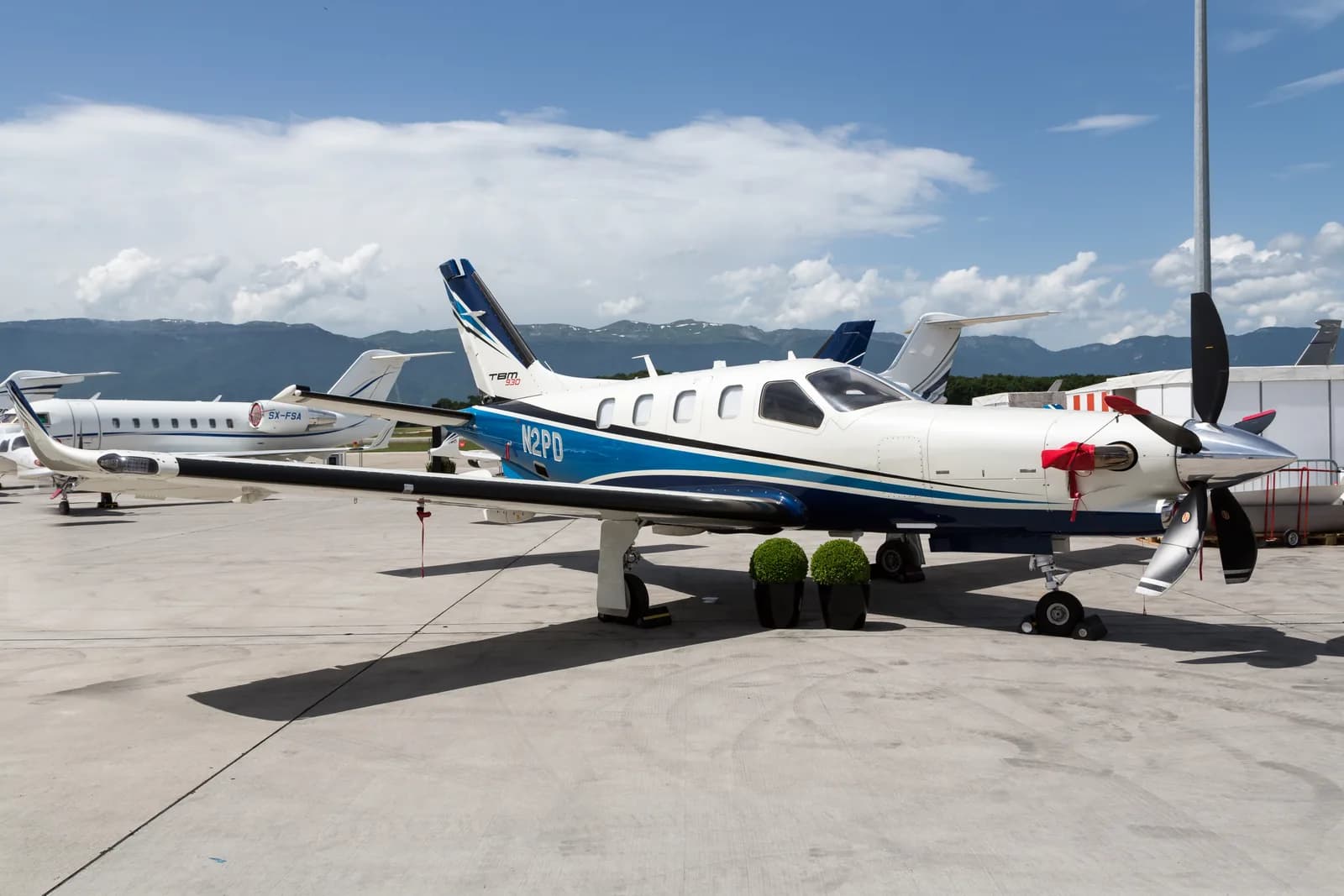
Daher TBM 930 — Photo: Matti Blume, CC BY-SA 4.0 (Wikimedia Commons)

Already familiar with light singles? Compare with our Aircraft Academy or refresh basics on the Cessna 172 fundamentals. For the deep dive on FL310 efficiency, read our guide to optimal cruise altitude selection.

TBM 930 Key Performance Specs

Before we discuss technique, here are the numbers you need to plan your flight. These specs are valid for the standard TBM 930 in MSFS 2024 and align with the official Daher pilot operating handbook.

ParameterValue
EnginePratt & Whitney PT6A-66D, 850 SHP (flat-rated)
Max cruise speed330 KTAS at FL280–FL310
Service ceiling31,000 ft (FL310)
VNE (never exceed)266 KCAS
VNO (max structural cruise)245 KCAS
Stall speed clean (Vs)79 KCAS
Stall speed landing (Vso)65 KCAS
Usable fuel1,100 lb (≈ 290 US gallons of Jet-A)
MTOW7,394 lb (3,354 kg)
Range with reserves1,730 NM at long-range cruise

FL310 Cruise: Where the TBM 930 Earns Its Reputation

The PT6A-66D is flat-rated, meaning it delivers 850 SHP up to ISA+10°C. Below FL280, the engine is producing more torque than you need and burning extra fuel for nothing. The sweet spot is FL280 to FL310, where the engine reaches its peak efficiency and the airframe enjoys lower drag.

Climb directly to FL310 for legs longer than 400 NM. For shorter trips (under 250 NM), FL230–FL250 is more pragmatic — climbing higher costs more time and fuel than it saves. Read our cruise altitude selection guide for the full decision matrix.

  • Best fuel flow: At FL310 cruise climb, expect 55–60 gallons per hour at 290 KTAS. Below FL200, the same power setting burns 75+ GPH for only 250 KTAS — a 30% efficiency loss.
  • Climb profile: Use 170 KIAS to FL180, then 160 KIAS up to FL310. Maintain 1,500 fpm initial, reducing to 800 fpm above FL250. Pushing harder cooks the ITT for no time gain.
  • Long-range cruise: For maximum range, reduce torque to 80% at FL310. You lose 25 knots of TAS but gain 12% in fuel economy — the difference between Paris–Athens with full tanks or comfortable reserves.
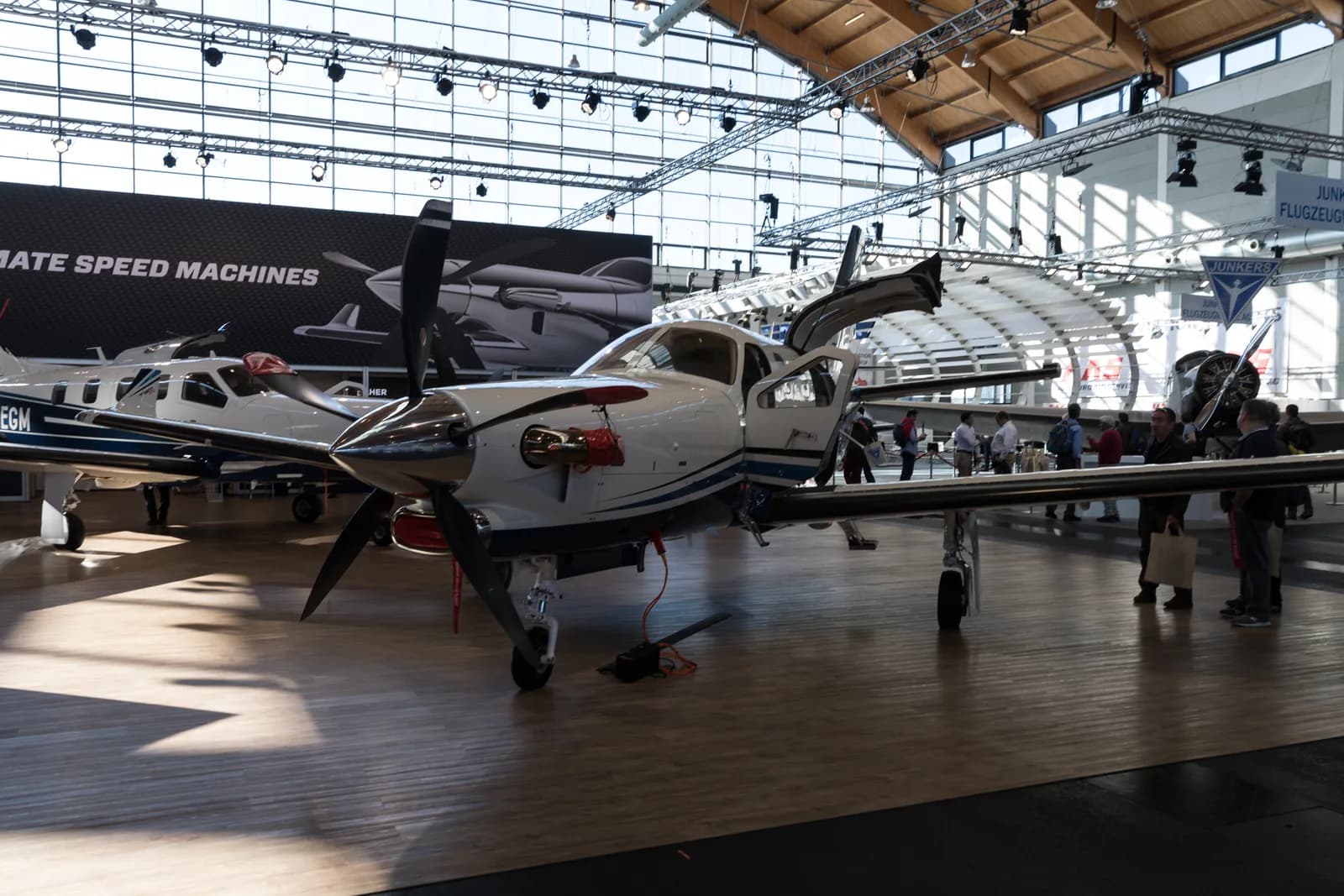
Daher TBM 930 on static display showing turboprop nose and air intake
Daher TBM 930 EBACE 2018 — Photo: Matti Blume, CC BY-SA 4.0 (Wikimedia Commons)

Mastering the PT6A-66D

The Pratt & Whitney PT6A is one of the most reliable turboprop engines ever built — but it punishes sloppy operation. Three numbers matter: ITT (Inter-Turbine Temperature), torque, and Ng (gas generator speed). Watch them on every power change.

Your goal: keep ITT below 820°C in steady-state and never exceed 870°C transient. A single overtemp event in MSFS may not break the engine, but it tanks your safety score on PilotLeague.

  • Startup discipline: Idle Ng must reach 13% before introducing fuel. ITT spikes during light-off — keep your finger on the cut-off if it climbs above 900°C. Never start with a tailwind above 10 knots.
  • ITT management in cruise: Hot ISA+15 days at FL310, you may be ITT-limited rather than torque-limited. Reduce power until ITT stabilizes 30°C below redline. Range loss is minimal; longevity gain is huge.
  • Beta range on landing: After touchdown, lifting the power lever over the gate engages reverse thrust. Use it briefly (3–4 seconds max) on contaminated runways. Excessive beta blows debris into the prop and pegs your engine wear stat.

Fuel Planning the TBM Way

Fuel planning a TBM 930 is simpler than a jet but trickier than a piston: you burn 60 GPH cruising and 18 GPH on the ground. Use our fuel planner tool to compute exact reserves for any leg.

Rule of thumb: full tanks (290 gallons) give you about 4h45 of cruise plus 45 minutes of reserve. For most European hops (≤2 hours), departing with 175 gallons saves 700 lb of weight, climbs you 200 fpm faster, and cuts your fuel score variance significantly.

Approach & Landing Speeds

The TBM 930 has a forgiving wing but it floats. Hit the right speed at the threshold or you'll plant 1,500 ft past the touchdown zone. Reference target: 85 KIAS over the fence at typical landing weight.

  • Stabilized approach: Final approach 100 KIAS, gear down, full flaps below 122 KIAS. Power around 25% torque on a 3° glide — adjust ±5% per 100 fpm correction. Beta is armed but not engaged.
  • Flare technique: Begin the flare 20 ft AGL with a smooth pitch increase to 4–5° nose-up. Bleed power to idle in the flare, not before. Target landing rate under 200 fpm — see our flare timing guide for the full breakdown.

Track Your TBM 930 Performance with PilotLeague

PilotLeague analyzes 52+ flight variables in real time and gives you the objective data turboprop pilots need. For the TBM 930 specifically, three metrics will tell you if you're flying it right:

  • Fuel efficiency score: Your normalized fuel-per-NM is benchmarked against other TBM pilots. Hit the fuel ranking to see how you compare on identical legs.
  • Landing rate analysis: PilotLeague captures your touchdown vertical speed, G-force, and flare timing. The landing rate guide shows what scores 100% in the TBM.
  • ITT exceedance detection: Every overtemp event is logged with timestamp and duration. One spike above 870°C costs you 8 points on your safety score.
Download PilotLeague — Free

TBM 930 FAQ

What is the realistic cruise speed of the TBM 930 in MSFS 2024?

Expect 290–310 KTAS at FL280 in cruise climb power, and up to 330 KTAS at FL310 with maximum cruise torque. Below FL200, you typically see 240–260 KTAS with significantly higher fuel burn.

How much fuel does the TBM 930 burn per hour?

At FL310 cruise climb, the PT6A-66D burns 55–60 US gallons per hour (370–400 lb/h). Long-range cruise drops this to 48 GPH. Ground idle and taxi run 18 GPH.

Is the TBM 930 hard to land in flight simulator?

It is forgiving aerodynamically but unforgiving on energy management. Cross the threshold at 85 KIAS — too fast and you float; too slow and the sink rate spikes. Use beta carefully and only after main wheels are firmly on the runway.

What altitude should I cruise at in the TBM 930?

Use FL280–FL310 for legs longer than 400 NM (peak engine efficiency and lower drag). For trips under 250 NM, FL230–FL250 is more time-efficient because climb fuel is not amortized over a long cruise.

Related Reading

Cessna 172 Fundamentals — the piston counterpartOptimal Cruise Altitude SelectionDaher TBM 930 — Official manufacturer page

Conclusion: The Turboprop Mindset

The TBM 930 rewards pilots who think in terms of energy, ITT, and altitude rather than RPM and manifold pressure. Climb high, watch your temperatures, fly stabilized approaches, and let beta finish the job on the runway. Track every flight on PilotLeague to convert subjective feel into objective improvement — fuel score, landing rate, safety. The numbers don't lie, and they're how you become the pilot who actually flies a TBM 930 the way Daher intended.

Conclusion: The Turboprop Mindset

The TBM 930 rewards pilots who think in terms of energy, ITT, and altitude rather than RPM and manifold pressure. Climb high, watch your temperatures, fly stabilized approaches, and let beta finish the job on the runway. Track every flight on PilotLeague to convert subjective feel into objective improvement — fuel score, landing rate, safety. The numbers don't lie, and they're how you become the pilot who actually flies a TBM 930 the way Daher intended.

Practice Makes Perfect

Apply these techniques in your next flight and track your improvement with PilotLeague.

Download PilotLeague Free
Aircraft KnowledgeBack to Flight Academy